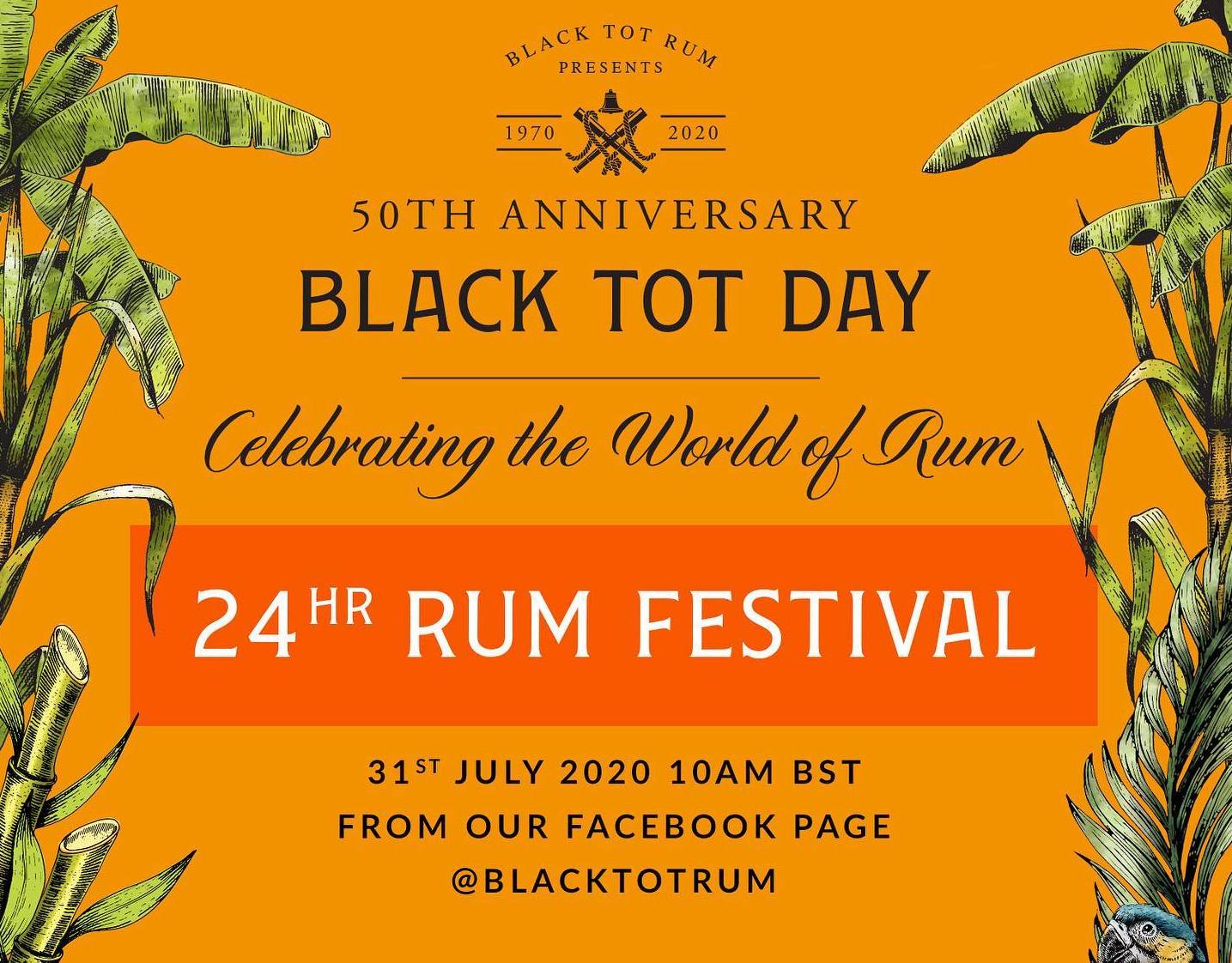
Black Tot Day is the anniversary of the day that the British Navy received their rum ration for the final time on the 31st of July, 1970. Rum enthusiasts in Europe and North America celebrate Black Tot Day every year by honoring the drinking traditions of the British Navy, and celebrating the legacy of the West India Docks that supplied rum for the Navy.
The British Navy was an Imperial military force that protected the slave trade and suppressed struggles for fair treatment and human rights in the Caribbean. The West India Docks were warehouses built by slaveowners and used to store wealth that was forcibly extracted from the Caribbean. Due to this, there has been some minor pushback to Black Tot Day from people in the Caribbean within the last decade. This criticism is usually ignored, and when acknowledged, the rum industry insists that Black Tot Day is innocent fun and not Imperial Nostalgia.
By the fiftieth anniversary of Black Tot Day in 2020, this tired argument that the day was just innocent fun was no longer acceptable.
In the years leading up to the fiftieth anniversary of Black Tot Day in 2020, there were growing conversations about reparations within the Caribbean. These were prompted by events like the Treasury of the United Kingdom revealing in 2018 that the amount paid to slave owners as compensation for emancipation was so high, that working class British people spent almost two centuries paying it off, British Royalty visiting the Caribbean in 2019, and the development of a CARICOM 10 Point Plan for Reparatory Justice.
There was also increased discussion about the repatriation of cultural material and other forms of wealth that were unethically taken from the Global South and now held in the capitals of the former colonizers. This would include the rum stolen and stored in the West India Docks and other similar warehouses in Europe.
In the months leading up to the fiftieth anniversary of Black Tot Day, there were protests against police brutality that started in the United States, and quickly spread to other parts of the world. The roots of modern policing and its many problems lie in the slave patrols of the West Indies and the American South. In the Caribbean, these slave patrols evolved into the Colonial Police, who worked with the Royal Navy in suppressing struggles for fair treatment and human rights across the region. Police brutality and unjust military intervention both originated in the practices of the British Navy in the Caribbean.
In the weeks leading up to the fiftieth anniversary of Black Tot Day, hundreds of statues of controversial colonizers were defaced or removed all across the world. Among them was a statue of Robert Milligan, the slave owner responsible for building the West India Docks which were the warehouses that they used to store the wealth stolen from the Caribbean.
Anyone with an interest in the history of rum was aware of these events in the years, months, and weeks leading up to Black Tot Day in 2020. Despite this, Black Tot Rum and almost every major Caribbean rum company celebrated the fiftieth anniversary of Black Tot Day by honoring the traditions of an anti-Caribbean military and celebrating the legacy of slaveowners. To add insult to injury, they ended with an after-party on Emancipation Day almost in open mockery of the victims of slavery.
This was not the first time that Black Tot Rum displayed a nonchalant attitude towards the legacy of slavery in the Caribbean, and its relevance to the history of rum. Two years earlier, the owner hosted an event called The Rum Tasting of the Century where he claimed that rum distilled in Barbados in 1780 had no connection to slavery. There is intent to this behavior, and it highlights the need for change in the Caribbean Rum Industry.
The 50th Anniversary of Black Tot Day and Intentional Colonial Nostalgia in the Rum Industry;…
Posted by QUAD tt on Thursday, July 31, 2025